Pound for pound, water is the most significant ingredient in the production of computer chips, withdrawing upwards of five to ten million gallons per day of city water. In 2023, the Semiconductor Industry Association identified 108 existing and announced chip fabs to be constructed in the United States. When the geocoordinates for these locations were placed on the water stress maps produced by the World Resources Institute’s Aqueduct maps, 38 percent of the existing and announced fab sites in the US are in regions with high and extremely high physical quantity risk, and 61 percent of the fab sites are in regions experiencing medium to high as well as high to extremely high physical quantity risk.
Cognizant of the criticality of water to the chip manufacturing process, almost all fabs have implemented some type of water conservation, whether it be modest internal reuse of final quality rinses or large-scale end-of-pipe zero liquid discharge wastewater recovery systems. In almost all cases, the recovered or reclaimed water is not recycled back into the ultrapure water treatment systems but rather used as makeup water for mechanical systems (scrubbers, cooling towers, etc.) where the water does not contact the wafer. Almost all fabs have not recycled treated wastewater back into their UPW systems due to a perceived risk to manufacturing yield. This presentation will discuss the costs, benefits, and risks of UPW recycling and why UPW recycling is long overdue throughout the industry.
Speakers:
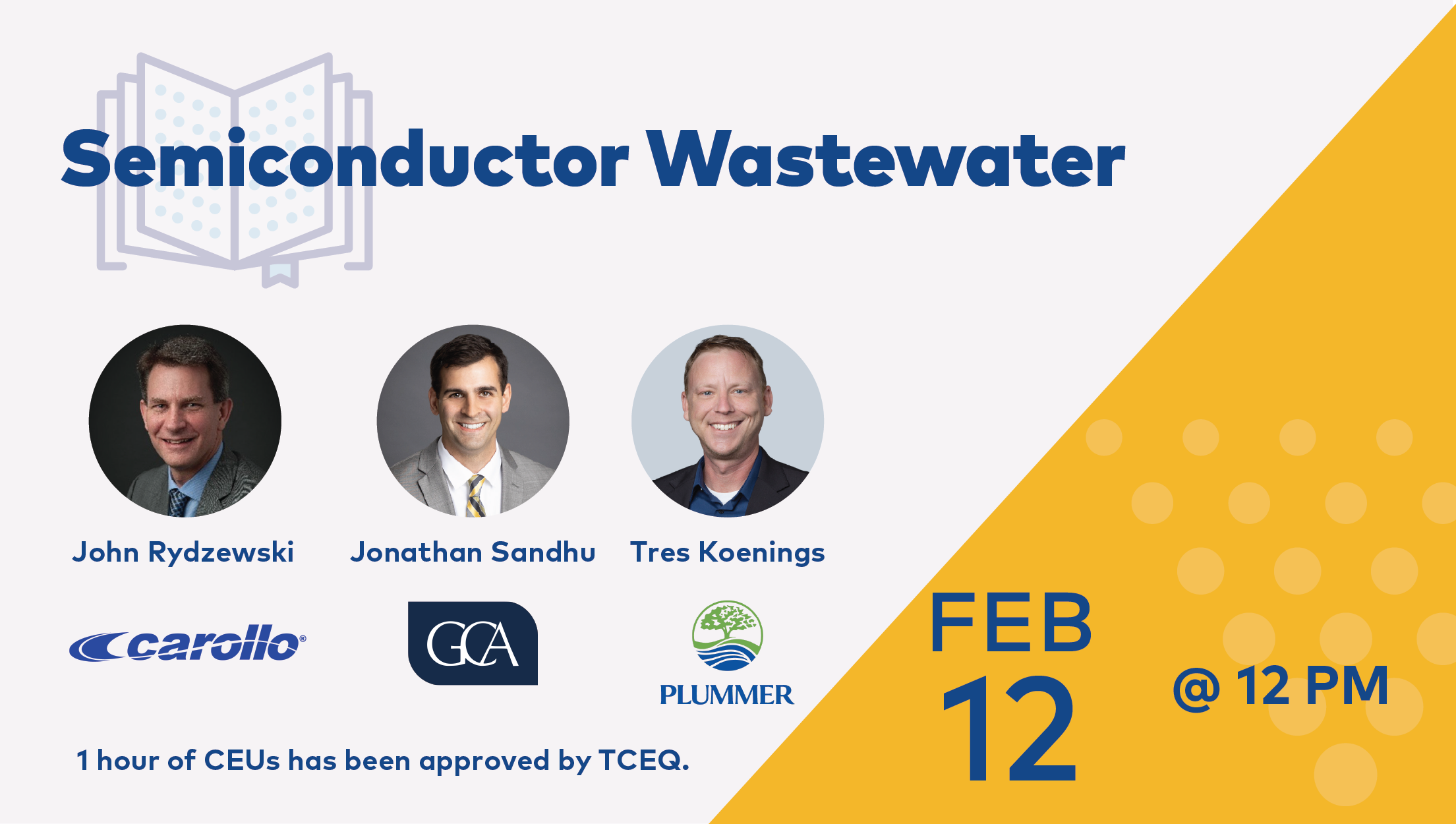
- John Rydzewski, Vice President and Private Sector Group Sustainability Lead, Carollo Engineers
- Jonathan Sandhu, Assistant Director, Gulf Coast Authority
- Tres Koenings, Senior Project Manager, Plummer Associates
Registration and Sponsorship
WEAT Member Registration: Complimentary
Non-Member Registration: $85
Webinar Sponsorship: $300
Sponsorship includes your name and logo acknowledgment at the webinar, on the WEAT website, in the bimonthly Texas WET magazine, and on the WEAT social media pages.